
Serving Abundant Communities
The People and Places
Shaping Illinois
Across Illinois, Black communities are preserving history, caring for land, creating culture, organizing for change and shaping their own futures.
Serving Abundant Communities is a growing collection of stories about the people, organizations and places carrying that work forward. It begins with what is already present: leadership, knowledge, creativity, connection, joy and power.

Black Population Centers Across Illinois
A statewide landscape of Black community and leadership
The Illinois Racial Justice and Equity Landscape Study identified 81 places across the state as Black Population Centers. The study examined local history and conditions, as well as the organizations, leaders and relationships advancing racial equity and racial justice in communities throughout Illinois.
This interactive map offers a starting point for exploring those communities. Over time, it will connect visitors to place profiles, community stories and ongoing reporting about the people and organizations shaping Illinois.
Notes:
- Justice,Joliet, Kankakee, North Chicago,Waukegan, Freeport, Rock Island, Champaign Danville, Decatur, DeKalb, Normal, Peoria, Rantoul, Springfield, Urbana, Alton, Sauget, Shiloh, Carbondale,Mt. Vernon : At least one Census tract in this place has greater than 30% Black/African American population.
- Hopkins Parks: Refers to Willow Brook Estates, a Census-designated place in Will County on the Indiana border.
- Pembroke Township contains Hopkins Park.
East St. Louis
History, culture and a community shaping what comes next. East St. Louis carries a history marked by industry, music, migration, Black culture and community life, as well as the violence of the 1917 East St. Louis Massacre and decades of disinvestment. Residents and community advocates continue to preserve that history while working toward the city’s future.
During a three-day visit, staff and board members spent time in East St. Louis connecting with local leaders and organizations. A tour led by the East St. Louis Historical Society traced the city’s history through its neighborhoods, historic structures, industrial past and cultural legacy. The visit also created space to learn about present-day concerns, community aspirations and the work residents are leading.
Communities and Regions
The story continues across Illinois. Pembroke Township and East St. Louis are 2 places within a much larger statewide landscape. Future profiles will introduce additional Black Population Centers and regions across Illinois. Each will reflect the history and character of the place, the people and organizations leading locally, the relationships connecting their work and the futures communities are building for themselves.
Pembroke Township
Land, legacy and a future rooted in community
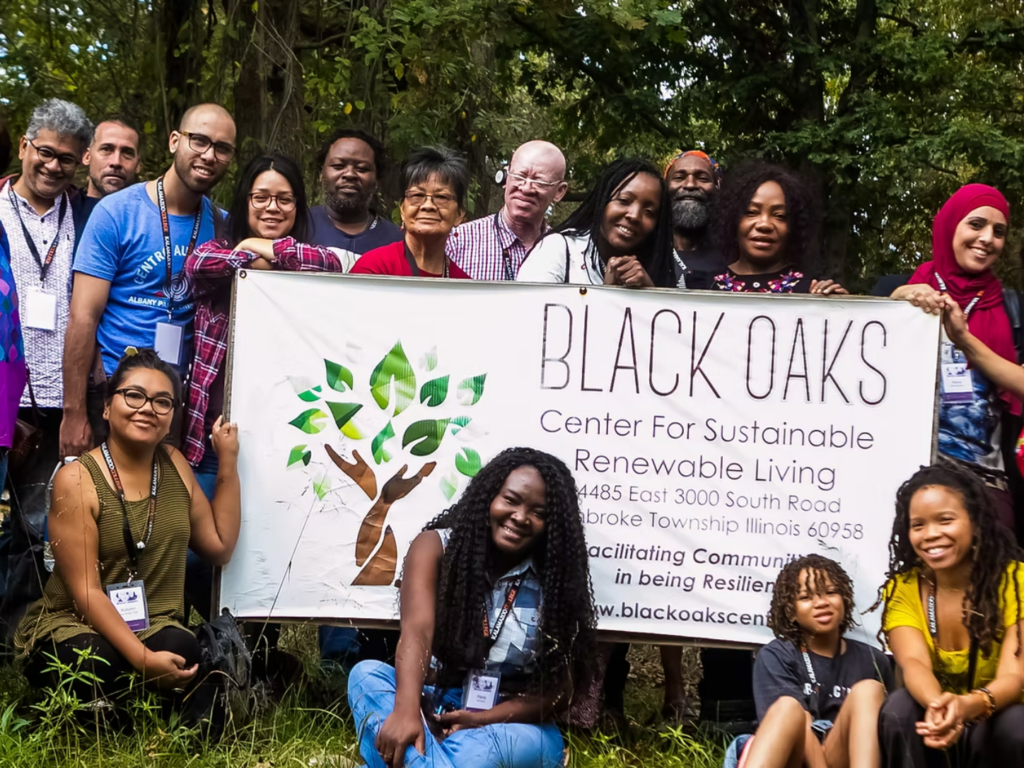
Pembroke Township’s history as a Black agricultural community reaches back to the 1860s, when Pap and Mary Eliza Tetter, who had escaped slavery, established roots there. Farming families developed a local food system shaped by fields, orchards, agricultural tourism and a deep relationship with the land.
That agricultural legacy continues through the work of people and organizations committed to protecting the land and strengthening community power. Black Oaks Center of Pembroke is working with partners to preserve the area’s farming traditions, reclaim farmland, advance sustainable practices and revitalize the local food system. Its co-founders, Fred Carter and Dr. Jifunza Wright-Carter, have shared their knowledge of the community’s history, the challenges facing local farmers and their vision for Pembroke’s future.
During a visit to Pembroke Township, our team spent time listening to and learning from Black Oaks Center and community members. Their stories reflected generations of Black farmers caring for the land, sustaining local knowledge and building toward what comes next.